Ever wondered what makes things move, stop, or change direction? It all comes down to one fundamental concept: force. From the gentle push of a breeze to the immense power of a rocket launch, force shapes our universe in ways both subtle and dramatic.
What Is Force? A Foundational Understanding

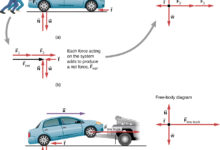
At its core, force is any interaction that, when unopposed, changes the motion of an object. This definition, rooted in classical physics, serves as the cornerstone for understanding how everything from atoms to galaxies behaves. Force is not just a scientific term—it’s a daily reality. Whether you’re lifting a bag, typing on a keyboard, or walking down the street, you’re constantly applying and experiencing force.
The Scientific Definition of Force
In physics, force is defined as a vector quantity—meaning it has both magnitude and direction. According to Newton’s Second Law of Motion, force equals mass multiplied by acceleration (F = ma). This equation is one of the most powerful tools in science, allowing us to calculate everything from the thrust needed for a spacecraft to the impact of a car crash.
- Force is measured in newtons (N), named after Sir Isaac Newton.
- One newton is the force required to accelerate a 1-kilogram mass by 1 meter per second squared.
- Forces can be contact-based (like friction) or act at a distance (like gravity).
Types of Forces in Everyday Life
We encounter various types of forces every day, often without realizing it. These include:
Gravitational Force: The pull that keeps us grounded on Earth.Learn more about gravity at NASA’s Space Place.Frictional Force: The resistance that occurs when two surfaces slide against each other.Normal Force: The support force exerted by a surface on an object in contact with it.Tension Force: The pull transmitted through a string, rope, or cable when it’s pulled tight.
.”Force is the agent of change in the physical world.Without it, motion would be impossible.” — Dr.Elena Rodriguez, Theoretical Physicist
Newton’s Laws of Motion: The Backbone of Force
No discussion of force is complete without examining Newton’s three laws of motion.These principles, formulated in the 17th century, remain the foundation of classical mechanics and are essential for understanding how force influences motion..
Newton’s First Law: The Law of Inertia
Also known as the law of inertia, this principle states that an object at rest stays at rest, and an object in motion stays in motion with the same speed and in the same direction unless acted upon by an unbalanced force.
- This explains why seatbelts are crucial—they counteract inertia during sudden stops.
- In space, where friction is minimal, objects can drift indefinitely unless a force acts on them.
- Inertia depends on mass: the greater the mass, the greater the inertia.
Newton’s Second Law: Force Equals Mass Times Acceleration
This law quantifies the relationship between force, mass, and acceleration. It tells us that the acceleration of an object is directly proportional to the net force acting on it and inversely proportional to its mass.
- If you push a shopping cart with twice the force, it accelerates twice as much (assuming mass is constant).
- A heavier object requires more force to achieve the same acceleration as a lighter one.
- This law is used in engineering, sports science, and vehicle safety design.
Newton’s Third Law: Action and Reaction
For every action, there is an equal and opposite reaction. This means that forces always occur in pairs. When you jump, you push down on the ground, and the ground pushes you up with equal force.
- Rockets propel themselves forward by expelling gas backward at high speed.
- Walking is possible because your foot pushes backward on the ground, and the ground pushes you forward.
- This law explains why recoil happens when a gun is fired.
Types of Force in Physics
Physics categorizes forces into two main groups: contact forces and non-contact (or field) forces. Understanding these categories helps clarify how different interactions occur in nature.
Contact Forces: When Objects Touch
Contact forces require physical interaction between two objects. These are the most intuitive types of force we experience daily.
- Applied Force: A force directly applied by a person or object, like pushing a door.
- Friction: Opposes motion and is essential for walking, driving, and gripping objects.
- Air Resistance: A type of friction that acts on objects moving through air.
- Spring Force: The force exerted by a compressed or stretched spring, governed by Hooke’s Law.
Non-Contact Forces: Action at a Distance
These forces act without physical contact and are mediated by fields. They are fundamental to the structure of the universe.
- Gravitational Force: Acts between any two masses. It’s the weakest of the fundamental forces but dominates at large scales. Explore more at Encyclopedia Britannica.
- Electromagnetic Force: Responsible for electricity, magnetism, and light. It holds atoms and molecules together.
- Nuclear Forces: The strong force binds protons and neutrons in the nucleus; the weak force governs radioactive decay.
Force in Engineering and Technology
Engineers rely on the principles of force to design everything from bridges to smartphones. Understanding how forces interact ensures safety, efficiency, and innovation in modern technology.
Structural Engineering and Load Forces
Buildings and bridges must withstand various forces, including gravity, wind, and seismic activity. Engineers calculate load distributions to prevent collapse.
- Dead loads: Permanent forces like the weight of the structure itself.
- Live loads: Temporary forces like people, furniture, or vehicles.
- Environmental loads: Wind, snow, and earthquake forces that vary over time.
Mechanical Systems and Force Transmission
Machines use force to perform work. Levers, pulleys, gears, and hydraulics are all mechanisms designed to amplify or redirect force.
- Hydraulic systems use fluid pressure to multiply force, as seen in car brakes and heavy machinery.
- Robotic arms in manufacturing apply precise forces for assembly tasks.
- Force sensors in smartphones detect touch and pressure for user interaction.
Force in Nature and the Universe
From the tiniest subatomic particles to the largest cosmic structures, force governs the behavior of all matter. The universe operates on a delicate balance of fundamental forces.
Gravitational Force: Shaping the Cosmos
Gravity is the force that shapes galaxies, stars, and planetary systems. It pulls matter together, forming structures over billions of years.
- Black holes are regions where gravity is so strong that not even light can escape.
- Tidal forces from the Moon cause ocean tides on Earth.
- Orbital motion is a balance between gravitational pull and inertia.
Electromagnetic Force: Powering Life and Light
This force is responsible for chemical reactions, the structure of atoms, and the transmission of light and electricity.
- Photosynthesis relies on electromagnetic energy from the sun.
- Nerve signals in the human body are electrical impulses governed by electromagnetic principles.
- Modern communication (radio, Wi-Fi, cellular) depends on electromagnetic waves.
Nuclear Forces: The Power Within Atoms
The strong nuclear force holds atomic nuclei together, overcoming the repulsion between positively charged protons.
- Nuclear fusion in stars converts hydrogen into helium, releasing vast amounts of energy.
- Nuclear fission powers reactors and atomic weapons.
- The weak nuclear force allows neutrons to decay into protons, enabling radioactive processes.
Force in Human Physiology
The human body is a marvel of biomechanics, where muscles, bones, and nerves work together through the application of force.
Muscular Force and Movement
Muscles generate force by contracting, allowing us to move, lift, and maintain posture.
- Skeletal muscles work in pairs—when one contracts, the other relaxes.
- The force generated depends on muscle size, fiber type, and neural activation.
- Training increases muscular force through hypertrophy and improved coordination.
Biomechanics and Joint Forces
Joints experience various forces during movement, including compression, tension, and shear.
- The knee joint承受 forces up to several times body weight during running.
- Proper alignment reduces wear and tear on joints.
- Orthopedic implants are designed to withstand physiological forces over decades.
Measuring and Calculating Force
Accurate measurement of force is critical in science, engineering, and medicine. Various instruments and mathematical models help quantify force in different contexts.
Tools for Measuring Force
Several devices are used to measure force, each suited to specific applications.
- Spring Scales: Use Hooke’s Law to measure force based on spring extension.
- Load Cells: Electronic sensors that convert force into an electrical signal.
- Force Plates: Used in biomechanics to measure ground reaction forces during walking or jumping.
- Accelerometers: Measure acceleration, which can be used to calculate force when mass is known.
Mathematical Models of Force
Physics uses equations to predict how forces affect motion and structure.
- Newton’s Second Law (F = ma) is the most fundamental.
- Hooke’s Law (F = -kx) describes elastic forces in springs.
- Frictional force is calculated as F = μN, where μ is the coefficient of friction.
- Gravitational force between two masses is given by F = G(m₁m₂)/r².
“Understanding force is not just about equations—it’s about seeing the invisible hand that shapes reality.” — Prof. James Lin, MIT Physics Department
Force in Modern Research and Innovation
Today’s scientists are pushing the boundaries of what we know about force, from quantum mechanics to space exploration.
Quantum Forces and the Subatomic World
At the quantum level, forces behave differently than in the macroscopic world. The electromagnetic and nuclear forces dominate, and particles interact through force-carrying bosons.
- Photons mediate the electromagnetic force.
- Gluons carry the strong nuclear force, binding quarks together.
- The Higgs boson gives particles mass, influencing how they respond to force.
Space Exploration and Gravitational Challenges
Space missions must account for microgravity, orbital mechanics, and propulsion forces.
- Rocket engines generate thrust by expelling mass at high velocity (Newton’s Third Law).
- Gravity assists use planetary gravity to slingshot spacecraft, saving fuel.
- Astronauts train in simulated gravity environments to prepare for space missions.
Artificial Intelligence and Force Prediction
AI is being used to model complex force interactions in engineering, medicine, and climate science.
- Machine learning predicts structural failures by analyzing stress patterns.
- AI-powered prosthetics adapt force output based on user movement.
- Climate models simulate atmospheric forces to predict weather and climate change.
What is the unit of force?
The standard unit of force in the International System of Units (SI) is the newton (N). One newton is defined as the force required to accelerate a one-kilogram mass at a rate of one meter per second squared.
How does force affect motion?
Force directly affects motion by changing an object’s velocity. According to Newton’s Second Law, a net force causes acceleration. If forces are balanced, the object remains at rest or moves at constant velocity.
What are the four fundamental forces of nature?
The four fundamental forces are gravitational force, electromagnetic force, strong nuclear force, and weak nuclear force. These govern all interactions in the universe, from atomic to cosmic scales.
Can force exist without contact?
Yes, non-contact forces like gravity and magnetism act over a distance without physical touch. These forces are mediated by fields and are essential to the structure of matter and the cosmos.
How is force used in sports?
In sports, athletes apply and manage force to enhance performance. For example, sprinters generate explosive force at the start, while gymnasts control force to execute precise movements. Equipment like shoes and rackets are designed to optimize force transfer.
Force is far more than a physics term—it’s the invisible thread that weaves through every aspect of existence. From the way we move to the stars in the sky, force governs change, motion, and interaction. By understanding its principles, we unlock the secrets of nature and harness them for innovation, safety, and progress. Whether you’re a student, engineer, or simply curious, appreciating force deepens your connection to the physical world.
Further Reading:
