Have you ever stopped to wonder why everything around us stays grounded? The force of gravity is more than just a reason apples fall from trees—it’s a fundamental power shaping the universe. Let’s dive into its secrets, science, and surprises.
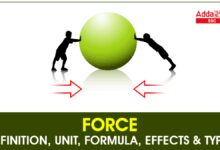
Force of Gravity: The Invisible Architect of the Universe
-(1).jpg?w=1200)
The force of gravity is the unseen hand that sculpts galaxies, holds planets in orbit, and keeps your feet firmly on the ground. Unlike other forces, gravity is always attractive, never repulsive, and acts over infinite distances—though its strength weakens with distance. It’s the weakest of the four fundamental forces, yet it dominates on cosmic scales because it accumulates with mass.
What Exactly Is the Force of Gravity?
At its core, the force of gravity is the mutual attraction between any two objects that have mass. The greater the mass, the stronger the pull. This force is described mathematically by Newton’s Law of Universal Gravitation and later refined by Einstein’s General Theory of Relativity.
- Every object with mass exerts gravitational pull.
- Gravity’s influence extends infinitely, though it diminishes with distance.
- It’s the only force that acts on all matter equally, regardless of composition.
Newton vs. Einstein: Two Views of Gravity
Sir Isaac Newton described gravity as a force acting instantaneously across space. His equation, F = G(m₁m₂)/r², accurately predicts planetary motion and everyday phenomena. But Albert Einstein revolutionized our understanding by reimagining gravity not as a force, but as the curvature of spacetime caused by mass and energy.
“Spacetime tells matter how to move; matter tells spacetime how to curve.” — John Archibald Wheeler, summarizing Einstein’s general relativity.
While Newton’s model works perfectly for most Earth-bound calculations, Einstein’s theory explains anomalies like the precession of Mercury’s orbit and the bending of light around massive objects.
How the Force of Gravity Shapes Our Daily Lives
You might think gravity is only relevant to astronauts or astrophysicists, but it’s deeply embedded in everyday existence. From walking to drinking water, gravity ensures predictability in our physical world. Without it, life as we know it would be impossible.
Gravity and Human Physiology
Our bodies are finely tuned to Earth’s gravitational field. Bones, muscles, and even the cardiovascular system rely on gravity to function properly. In microgravity environments like the International Space Station (ISS), astronauts experience muscle atrophy, bone density loss, and fluid redistribution.
- Bone density can decrease by 1-2% per month in space.
- Muscle mass diminishes without constant resistance from gravity.
- The heart doesn’t have to work as hard, leading to deconditioning.
NASA and other space agencies study these effects to prepare for long-term space missions. You can read more about NASA’s research on microgravity here.
Gravity in Technology and Engineering
Engineers must account for the force of gravity in every structure they design. Skyscrapers, bridges, and even smartphones are built with gravity in mind. For example, elevators use counterweights to balance gravitational pull, reducing energy consumption.
- Gravity-assisted drainage systems are used in plumbing.
- Gravitational potential energy is harnessed in hydroelectric dams.
- GPS satellites must correct for gravitational time dilation, a prediction of general relativity.
Without accounting for gravity, even the most advanced technologies would fail. The Global Positioning System (GPS), for instance, would accumulate errors of several kilometers per day if relativistic effects weren’t factored in. Learn more about GPS and relativity at Ohio State University’s astronomy page.
The Force of Gravity in the Cosmos
On a cosmic scale, the force of gravity is the master builder. It pulls gas and dust together to form stars, binds planets into solar systems, and clusters galaxies into vast superstructures. Without gravity, the universe would be a cold, dark, and disorganized expanse of particles.
Star Formation and Gravitational Collapse
Stars are born when massive clouds of gas and dust collapse under their own gravity. As the cloud contracts, pressure and temperature rise until nuclear fusion ignites in the core. This process can take millions of years, but once started, a star can shine for billions.
- Gravity compresses hydrogen atoms until they fuse into helium.
- The balance between gravitational collapse and outward radiation pressure defines a star’s life.
- When fusion stops, gravity wins, leading to stellar death—white dwarfs, neutron stars, or black holes.
Galactic Structures Held by Gravity
Galaxies, including our Milky Way, are held together by the collective gravitational pull of billions of stars, dark matter, and supermassive black holes. The rotation curves of galaxies suggest that visible matter alone isn’t enough to account for their gravitational binding—leading to the theory of dark matter.
“We have peered into the universe and seen that most of what is there is not what we see.” — Vera Rubin, pioneering astronomer who provided evidence for dark matter.
Dark matter, though invisible, exerts gravitational influence, shaping the large-scale structure of the cosmos. For more on dark matter research, visit CERN’s dark matter page.
Measuring the Force of Gravity: From Cavendish to LIGO
Understanding gravity requires precise measurement. From early torsion balance experiments to modern gravitational wave detectors, scientists have devised ingenious ways to quantify and observe the force of gravity.
The Cavendish Experiment: Weighing the Earth
In 1798, Henry Cavendish conducted the first laboratory experiment to measure the gravitational constant (G). Using a torsion balance with lead spheres, he calculated the density of the Earth—and indirectly, the strength of gravity.
force of gravity – Force of gravity menjadi aspek penting yang dibahas di sini.
- Cavendish’s experiment confirmed Newton’s law in a controlled setting.
- He determined G with remarkable accuracy for his time.
- This allowed scientists to calculate the mass of the Earth and other celestial bodies.
Today, G remains one of the least precisely known fundamental constants, with ongoing efforts to refine its value. Explore the details of the Cavendish experiment at University of Maryland’s physics archive.
Gravitational Waves: Ripples in Spacetime
In 2015, the Laser Interferometer Gravitational-Wave Observatory (LIGO) made history by detecting gravitational waves—ripples in spacetime caused by the collision of two black holes. This confirmed a key prediction of Einstein’s theory and opened a new window into the universe.
- Gravitational waves travel at the speed of light.
- They are produced by violent cosmic events like black hole mergers and neutron star collisions.
- Detecting them requires instruments sensitive enough to measure changes smaller than a proton.
LIGO’s discovery earned the 2017 Nobel Prize in Physics. For real-time updates on gravitational wave detections, visit LIGO’s official website.
Gravity vs. Other Fundamental Forces
The force of gravity is unique among the four fundamental forces of nature. While electromagnetism, the strong nuclear force, and the weak nuclear force operate at atomic and subatomic levels, gravity dominates at large scales. Yet, it’s by far the weakest.
Comparing Strength and Range
If you compare the gravitational attraction between two protons to their electromagnetic repulsion, gravity is about 10^36 times weaker. This extreme weakness puzzles physicists. Why is gravity so feeble compared to the others?
- Strong nuclear force: binds quarks, range = 10^-15 m.
- Electromagnetic force: infinite range, governs light and chemistry.
- Weak nuclear force: responsible for radioactive decay.
- Gravity: weakest, but dominates at large scales due to additive nature.
Why Gravity Stands Apart
Unlike the other forces, gravity isn’t explained by the Standard Model of particle physics. There’s no confirmed graviton—the hypothetical particle that would mediate gravity—yet. String theory and loop quantum gravity are attempts to unify gravity with quantum mechanics, but a complete theory of quantum gravity remains elusive.
“The theory of gravity and the theory of the other fundamental forces are like two islands in a sea, far apart.” — Edward Witten, theoretical physicist.
Unifying gravity with quantum mechanics is one of the greatest challenges in modern physics. For ongoing research, see Stanford Encyclopedia of Philosophy’s entry on quantum gravity.
Artificial Gravity and Future Technologies
As humanity ventures deeper into space, the absence of gravity poses serious challenges. Scientists and engineers are exploring ways to simulate the force of gravity to protect astronauts’ health and enable long-term space habitation.
Rotational Gravity: Spinning for Survival
One of the most feasible methods of creating artificial gravity is through centrifugal force. By rotating a spacecraft or space station, occupants experience an outward push that mimics gravity.
- The larger the radius of rotation, the more comfortable the artificial gravity.
- Too small a radius can cause dizziness due to Coriolis effects.
- Projects like NASA’s Nautilus-X concept proposed rotating modules for deep-space missions.
While no crewed spacecraft has used artificial gravity yet, it’s a key consideration for Mars missions. Learn about NASA’s concepts at NASA’s official site.
Gravitational Shielding and Sci-Fi Dreams
Science fiction often features gravity plating or anti-gravity devices. However, no known material or technology can block or negate gravity. According to general relativity, gravity isn’t a force field that can be shielded—it’s the geometry of spacetime itself.
- No experimental evidence supports gravitational shielding.
- Theories involving exotic matter or negative energy remain speculative.
- Current physics suggests artificial gravity will rely on motion, not magic.
While we can’t yet build anti-gravity boots, research into gravity manipulation continues in theoretical physics.
Gravity in Extreme Environments
The force of gravity behaves in astonishing ways under extreme conditions. Near black holes, on neutron stars, and in the early universe, gravity pushes the limits of our understanding.
Black Holes: Gravity’s Ultimate Triumph
When a massive star collapses, gravity can crush matter into a singularity—a point of infinite density. The gravitational pull becomes so strong that not even light can escape. This region is called a black hole, bounded by the event horizon.
- Time slows dramatically near a black hole due to gravitational time dilation.
- Spaghettification occurs when tidal forces stretch objects apart.
- Supermassive black holes reside at the center of most galaxies, including the Milky Way.
The Event Horizon Telescope captured the first image of a black hole in 2019. See the groundbreaking image at EHT’s website.
Neutron Stars and Gravitational Intensity
Neutron stars are the dense remnants of supernova explosions. A teaspoon of neutron star material weighs about a billion tons. Their gravity is so intense that it warps spacetime and bends light.
force of gravity – Force of gravity menjadi aspek penting yang dibahas di sini.
- Surface gravity is about 100 billion times stronger than Earth’s.
- They spin rapidly, emitting beams of radiation as pulsars.
- Colliding neutron stars produce gravitational waves and heavy elements like gold.
These extreme objects serve as natural laboratories for testing gravity under conditions impossible to replicate on Earth.
Common Misconceptions About the Force of Gravity
Despite being a familiar concept, the force of gravity is often misunderstood. From classroom myths to sci-fi exaggerations, let’s debunk some common fallacies.
“There’s No Gravity in Space”
This is one of the most widespread misconceptions. Astronauts in orbit aren’t weightless because there’s no gravity—they’re in free fall. The International Space Station experiences about 90% of Earth’s surface gravity. But because it’s moving sideways at 28,000 km/h, it keeps missing the Earth, creating continuous free fall.
- Gravity keeps the Moon in orbit around Earth.
- It holds the Earth in orbit around the Sun.
- Even in deep space, gravity from galaxies and clusters is present.
“Gravity Is Just a Theory”
This phrase misunderstands the scientific meaning of “theory.” In science, a theory is a well-substantiated explanation of natural phenomena, supported by evidence. Gravity is both a law (Newton’s equations) and a theory (Einstein’s relativity). It’s as real as evolution or electromagnetism.
“A theory is not a guess. It’s the highest level of scientific understanding.” — Neil deGrasse Tyson.
Gravity has been tested and confirmed countless times, from falling apples to GPS corrections.
What is the force of gravity?
The force of gravity is the natural phenomenon by which all objects with mass are attracted to one another. It’s described by Newton’s Law of Universal Gravitation and Einstein’s General Theory of Relativity, governing everything from falling objects to the motion of galaxies.
How does gravity work in space?
Gravity exists everywhere in space. Astronauts appear weightless because they are in continuous free fall around Earth. Gravity holds planets, stars, and galaxies together, even in the vacuum of space.
Can we create artificial gravity?
Yes, through rotation. A spinning spacecraft can simulate gravity via centrifugal force. While not yet used in crewed missions, it’s a leading concept for future long-duration space travel.
Why is gravity so weak compared to other forces?
This is an open question in physics. One hypothesis is that gravity “leaks” into extra dimensions, diluting its strength in our 3D space. Others suggest new physics beyond the Standard Model is needed.
Do black holes defy gravity?
No, black holes are the ultimate expression of gravity. When a massive star collapses, gravity overwhelms all other forces, creating a region where spacetime curvature is infinite.
The force of gravity is far more than a simple pull—it’s the cosmic architect, the silent engineer of motion, and a frontier of modern physics. From Newton’s apple to Einstein’s spacetime, from Earth’s tides to black holes, gravity shapes reality at every scale. While we’ve made incredible strides in understanding it, mysteries remain—dark matter, quantum gravity, and the nature of singularities. As we continue to explore, one thing is certain: the force of gravity will keep pulling us toward discovery.
force of gravity – Force of gravity menjadi aspek penting yang dibahas di sini.
Further Reading:
