What exactly is the force meaning? It’s more than just a physics term—it’s a concept that shapes our understanding of motion, power, and influence in both science and life. Let’s explore its depth together.
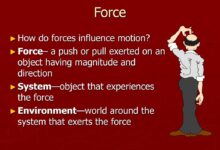
Understanding the Core Force Meaning

The term force meaning spans multiple disciplines, from physics to philosophy. At its most basic, force refers to any interaction that changes the motion of an object. But its implications go far beyond equations.
Definition in Physics
In classical mechanics, force is defined as any influence that causes an object to undergo a change in speed, direction, or shape. According to Newton’s Second Law, force equals mass times acceleration (F = ma). This foundational equation helps engineers, scientists, and students predict how objects behave under various conditions.
- Force is a vector quantity, meaning it has both magnitude and direction.
- It is measured in newtons (N), where 1 N = 1 kg·m/s².
- Forces can be contact-based (like friction) or act at a distance (like gravity).
For a deeper dive into Newtonian mechanics, visit Encyclopedia Britannica’s explanation of Newton’s laws.
Philosophical Interpretations of Force
Beyond physics, the force meaning takes on abstract dimensions. Philosophers like Nietzsche spoke of the ‘will to power’ as a fundamental force driving human behavior. In Eastern thought, concepts like Qi (in Chinese philosophy) or Prana (in Hinduism) represent life forces that animate beings.
“The will to power is the essence of life.” – Friedrich Nietzsche
These interpretations show that force isn’t just measurable—it’s also experiential and existential.
Force Meaning in Everyday Language
In common usage, ‘force’ often implies strength, compulsion, or authority. When we say someone was ‘forced’ to do something, we mean they acted under pressure. This linguistic flexibility makes the force meaning rich and context-dependent.
Linguistic Nuances
The word ‘force’ comes from the Latin fortis, meaning strong. Over time, it evolved to describe not just physical strength but also moral or legal authority. For example:
- Law enforcement: A ‘police force’ uses institutional power to maintain order.
- Military force: Nations deploy armed forces to protect interests.
- Force of habit: A psychological tendency so strong it feels involuntary.
These variations illustrate how the core force meaning adapts across contexts.
Idioms and Expressions
English is full of idioms that use ‘force’ metaphorically:
- With full force: Something happening intensely (e.g., a storm hitting with full force).
- In force: Currently active (e.g., a law in force).
- Force someone’s hand: To compel action through pressure.
These phrases show how deeply embedded the concept of force is in our communication.
Types of Physical Forces
In physics, forces are categorized based on how they act. Understanding these types helps clarify the scientific force meaning and its real-world applications.
Gravitational Force
Gravity is the force of attraction between masses. It keeps planets in orbit and gives weight to objects on Earth. Though it’s the weakest of the four fundamental forces, its range is infinite.
- Described by Newton’s Law of Universal Gravitation and Einstein’s General Relativity.
- Responsible for tides, planetary motion, and black holes.
Learn more about gravity at NASA’s Space Place.
Electromagnetic Force
This force acts between charged particles. It’s responsible for electricity, magnetism, and light. Unlike gravity, it can be both attractive and repulsive.
- Holds electrons in atoms.
- Enables technologies like motors, radios, and MRI machines.
Its strength is about 10^36 times greater than gravity!
Strong and Weak Nuclear Forces
These forces operate at the subatomic level:
- Strong nuclear force: Binds protons and neutrons in the nucleus. It’s the strongest known force but acts only over tiny distances.
- Weak nuclear force: Responsible for radioactive decay and nuclear fusion in stars.
Together, these four fundamental forces govern all interactions in the universe.
Force Meaning in Psychology and Behavior
While physical forces are measurable, psychological forces are felt. The force meaning in human behavior often refers to internal or external pressures that drive decisions.
Cognitive Dissonance as a Mental Force
When beliefs conflict with actions, people experience discomfort—a kind of mental force pushing them to change. For example, a smoker who knows smoking causes cancer may feel compelled to quit or rationalize their habit.
- This internal tension is a force for behavioral change.
- Leon Festinger’s theory of cognitive dissonance explains this phenomenon.
Read more at Simply Psychology.
Social and Peer Pressure
Humans are social creatures, and group dynamics exert powerful forces on individual choices. Peer pressure can influence everything from fashion to ethical decisions.
- Adolescents are especially sensitive to social force.
- Conformity studies (like Asch’s experiments) show how strong this force can be.
“The group has a power over the individual that cannot be denied.” – Solomon Asch
This invisible force shapes culture, norms, and identity.
Force in Technology and Engineering
Engineers harness the force meaning to design everything from bridges to robots. Understanding how forces interact is essential for safety and innovation.
Structural Engineering and Load Forces
Buildings must withstand various forces: gravity (dead load), people and furniture (live load), wind, and earthquakes. Engineers use materials and designs to distribute these forces safely.
- Trusses and arches redirect force efficiently.
- Skyscrapers use damping systems to counteract wind force.
For example, the Burj Khalifa uses a buttressed core to resist lateral forces.
Mechanical Systems and Force Transmission
Machines convert and transmit force through levers, gears, and hydraulics. A car’s braking system, for instance, uses hydraulic force to stop wheels.
- Pascal’s Principle explains how pressure in fluids transmits force equally.
- Hydraulic lifts can multiply force dramatically with minimal input.
This principle is vital in construction equipment and aircraft controls.
Force Meaning in Legal and Political Contexts
In governance, ‘force’ often refers to authority backed by power. The force meaning here is about legitimacy, enforcement, and control.
Use of Force by Authorities
Police and military are authorized to use force under specific conditions. However, this power is highly regulated to prevent abuse.
- International law defines rules for military engagement (e.g., Geneva Conventions).
- Domestic policies outline when law enforcement can use physical force.
Organizations like Amnesty International monitor force usage globally.
Force of Law
When a law is ‘in force,’ it is legally binding. This phrase emphasizes the authority behind legislation.
- Laws derive their force from constitutions and democratic processes.
- Without enforcement, laws lose their force.
The force of law is not physical—it’s institutional and symbolic.
Metaphorical and Cultural Representations of Force
Cultures use the force meaning symbolically to represent power, destiny, and morality. These metaphors shape how we understand the world.
The Force in Star Wars
George Lucas’s ‘The Force’ is perhaps the most famous fictional representation. It’s a mystical energy field that binds the galaxy together, used by Jedi and Sith.
- Represents balance between good and evil.
- Draws from Eastern philosophies and mythological archetypes.
Though fictional, it reflects real human desires for meaning and control.
Force in Mythology and Religion
Many traditions speak of a universal life force:
- Qi (China): The vital energy flowing through all things.
- Prana (India): The breath of life in yoga and Ayurveda.
- The Holy Spirit (Christianity): A divine force guiding believers.
These concepts show that the force meaning transcends science—it’s spiritual.
What is the basic definition of force in physics?
Force in physics is any interaction that changes the motion of an object. It is a vector quantity measured in newtons (N) and defined by Newton’s Second Law: F = ma (force equals mass times acceleration).
How is force used in everyday language?
In daily use, ‘force’ can mean physical strength, compulsion, or authority. Common expressions include ‘law enforcement,’ ‘force of habit,’ and ‘with full force,’ showing its versatility.
What are the four fundamental forces of nature?
The four fundamental forces are gravitational, electromagnetic, strong nuclear, and weak nuclear forces. They govern all interactions in the universe, from atomic to cosmic scales.
Can force be both physical and psychological?
Yes. While physical force involves measurable push or pull, psychological force refers to internal or social pressures that influence behavior, such as peer pressure or cognitive dissonance.
What does ‘The Force’ in Star Wars symbolize?
‘The Force’ in Star Wars symbolizes a universal energy that connects all living things. It represents balance, destiny, and the struggle between good and evil, drawing from real-world spiritual traditions.
From the laws of physics to the depths of human psychology, the force meaning is a powerful and multifaceted concept. It shapes how we understand motion, behavior, authority, and even spirituality. Whether measured in newtons or felt in the heart, force is a fundamental part of existence. By exploring its many dimensions, we gain deeper insight into the forces that move our world—both seen and unseen.
Further Reading:
