Ever wondered what gives certain people, strategies, or systems an undeniable edge? It’s not just luck—it’s the force factor at work, quietly shaping outcomes behind the scenes.
Understanding the Core Concept of Force Factor

The term force factor may sound like something pulled from a physics textbook or a sci-fi movie, but in reality, it’s a multidimensional concept that applies across industries, leadership, personal development, and even digital marketing. At its core, the force factor represents the invisible yet measurable influence that amplifies results, drives momentum, and creates disproportionate impact from seemingly small inputs.
Defining Force Factor in Modern Context
While not a formally recognized scientific law, the force factor is increasingly used in strategic thinking to describe the multiplier effect in systems. Think of it as leverage on steroids—where the right action, at the right time, in the right environment, produces exponential outcomes. In business, this could mean a single marketing campaign going viral. In personal growth, it might be a mindset shift that unlocks years of potential.
According to research in behavioral psychology and organizational dynamics, small triggers—what James Clear calls “atomic habits” in his book Atomic Habits—can act as force factors when aligned with larger systems. You can read more about this principle at James Clear’s official site.
Historical Roots and Evolution of the Term
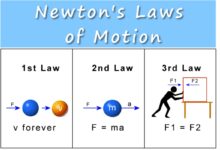
Though the phrase “force factor” gained traction in the 21st century, its roots trace back to Newtonian physics, where force equals mass times acceleration (F = ma). This foundational equation inspired metaphors in management and innovation. In the 1980s, business thinkers began using “force” analogies to describe market pressures, competitive advantages, and organizational inertia.
By the 2000s, thought leaders like Peter Senge and Gary Hamel integrated these ideas into corporate strategy, referring to “strategic force multipliers.” Over time, the phrase evolved into “force factor” as a catch-all term for high-leverage actions that generate outsized results.
“The force factor isn’t about working harder—it’s about working smarter in a way that aligns with natural systems of growth and influence.”
Force Factor in Leadership and Organizational Dynamics
Leadership isn’t just about charisma or title—it’s about influence. And influence, when optimized, becomes a force factor. Exceptional leaders don’t just manage teams; they create environments where motivation, clarity, and purpose converge to produce extraordinary performance.
How Vision Acts as a Force Factor
A clear, compelling vision doesn’t just guide—it magnetizes. When employees understand not just *what* they’re doing, but *why*, their engagement skyrockets. Studies by Gallup show that teams with a strong sense of purpose are 21% more productive. That’s the force factor in action: purpose as a performance accelerator.
Consider companies like Tesla or SpaceX. Elon Musk’s vision of interplanetary civilization isn’t just aspirational—it’s a strategic force factor. It attracts top talent, inspires innovation, and justifies high-risk investments that would otherwise seem irrational.
Emotional Intelligence as a Hidden Force Multiplier
Research from the Center for Creative Leadership reveals that emotional intelligence (EI) accounts for nearly 90% of what sets high performers apart from peers with similar technical skills. EI—self-awareness, empathy, and relationship management—acts as a silent force factor in team cohesion and conflict resolution.
- Leaders with high EI reduce workplace friction.
- They foster psychological safety, which Google’s Project Aristotle identified as the #1 trait of effective teams.
- They navigate change with resilience, turning crises into opportunities.
For deeper insights, explore the findings at CCL’s research portal.
The Role of Force Factor in Digital Marketing
In the crowded digital landscape, standing out requires more than content and ads—it demands a force factor. This could be a unique value proposition, a viral hook, or a perfectly timed campaign that rides the wave of cultural momentum.
Leveraging Algorithms as a Force Factor
Platforms like Google, Instagram, and TikTok operate on algorithmic systems that reward specific behaviors: engagement, watch time, shares. When marketers understand these patterns, they can design campaigns that trigger algorithmic amplification—turning a single post into millions of impressions.
For example, TikTok’s “For You Page” algorithm favors content with high completion rates and rapid engagement. A video that keeps viewers watching for 15 seconds can be pushed to millions—this is the force factor of algorithmic alignment.
Learn more about TikTok’s algorithm from TikTok for Business.
Content Virality and the Force Factor of Emotion
Not all content spreads equally. Research by Jonah Berger, author of Contagious: Why Things Catch On, identifies six key drivers of virality—STEPPS: Social Currency, Triggers, Emotion, Public, Practical Value, and Stories.
Among these, emotion is perhaps the most potent force factor. Content that evokes awe, anger, or amusement is 30% more likely to be shared, according to a study published in the Journal of Marketing Research. Why? Because emotion bypasses rational filters and triggers impulsive sharing.
- Awe-inspiring videos (e.g., space footage) spread rapidly.
- Outrage-driven content fuels debate and amplification.
- Heartwarming stories create emotional resonance and sharing.
“When emotion meets utility, you’ve hit the force factor of virality.” — Jonah Berger
Force Factor in Personal Development and Productivity
Success isn’t linear. It’s punctuated by breakthroughs—those sudden leaps in performance, confidence, or income. These leaps are rarely random; they’re the result of a personal force factor: a habit, mindset, or routine that unlocks potential.
Habit Stacking and the Compound Force Factor
James Clear’s concept of habit stacking—linking a new behavior to an existing one—is a textbook example of a force factor. By anchoring a desired action (e.g., meditation) to a routine (e.g., brushing teeth), you reduce friction and increase consistency.
Over time, these small wins compound. A 1% improvement daily leads to a 37x increase over a year. That’s not just progress—it’s the force factor of compounding applied to personal growth.
Explore the science of small habits at James Clear’s Improvement Principle.
Mindset Shifts That Trigger Disproportionate Results
Carol Dweck’s research on the “growth mindset” reveals that belief in one’s ability to grow is a force factor in learning and achievement. Students with a growth mindset outperform peers, not because they’re smarter, but because they persist through challenges.
This mindset shift—from “I can’t do this” to “I can’t do this yet”—activates neuroplasticity, the brain’s ability to rewire itself. It transforms failure from a dead end into feedback.
- Adopting a growth mindset increases resilience.
- It encourages risk-taking and innovation.
- It turns setbacks into learning loops.
Force Factor in Innovation and Technology
Technological breakthroughs don’t happen in isolation. They emerge from ecosystems where ideas, resources, and timing converge. The force factor here is the synergy between invention and adoption—the moment a new technology meets a pressing need.
Network Effects as a Force Multiplier
One of the most powerful force factors in tech is the network effect. As more people use a platform (e.g., WhatsApp, LinkedIn), its value increases exponentially. This creates a self-reinforcing cycle: more users attract more users.
Metcalfe’s Law states that a network’s value is proportional to the square of its users (n²). This isn’t just theory—it’s why Facebook scaled so rapidly. The force factor? Early adoption in college campuses created critical mass, triggering viral growth.
Disruptive Innovation and the Force Factor of Timing
Clayton Christensen’s theory of disruptive innovation shows that timing is often the decisive force factor. Companies like Netflix didn’t win because they were first—they won because they were *right*.
When Blockbuster dominated video rentals, Netflix started with DVDs by mail—a niche market. But when broadband became widespread, Netflix pivoted to streaming, leveraging the force factor of technological readiness. Blockbuster, stuck in legacy systems, couldn’t adapt.
Read more about disruptive innovation at Harvard Business Review.
“Disruption doesn’t punish the slow—it rewards the timely.”
Measuring and Identifying the Force Factor
While the force factor often feels intuitive, it can—and should—be measured. Without metrics, it’s just luck. With data, it becomes a repeatable strategy.
Key Performance Indicators (KPIs) That Reveal Force Factors
In business, certain KPIs act as early warning systems for force factors. These include:
- Customer Lifetime Value (CLV): A sudden increase may indicate a new force factor in retention.
- Virality Coefficient (k): If each user brings in more than one new user (k > 1), you’ve hit a force factor in growth.
- Employee Net Promoter Score (eNPS): High scores suggest a cultural force factor driving engagement.
Tools like Google Analytics, HubSpot, and Tableau can help track these metrics in real time.
Data Analytics and Predictive Modeling
Advanced analytics can identify patterns that precede force factor events. For example, machine learning models can detect which customer segments are most likely to refer others, allowing companies to focus on high-leverage groups.
A study by MIT Sloan found that companies using predictive analytics grow profits 3-5% faster than peers. That edge? The force factor of foresight.
Force Factor in Crisis Management and Resilience
Crisis doesn’t destroy organizations—it reveals them. Those with built-in force factors—like agile decision-making, strong culture, or redundant systems—don’t just survive; they emerge stronger.
Organizational Agility as a Force Factor
The pandemic tested every company’s resilience. Those that pivoted quickly—like restaurants shifting to delivery or gyms offering virtual classes—leveraged agility as a force factor.
Agility isn’t just speed—it’s the ability to sense, decide, and act faster than the environment changes. It requires decentralized decision-making, empowered teams, and a tolerance for experimentation.
Trust and Communication in High-Pressure Situations
During a crisis, trust becomes the ultimate force factor. Employees who trust leadership are 12x more likely to stay during tough times (Gallup). Transparent, frequent communication builds that trust.
- Regular updates reduce uncertainty.
- Empathy in messaging strengthens connection.
- Clear action plans restore confidence.
For crisis communication best practices, visit PRMIA’s Crisis Communication Guide.
“In chaos, the force factor isn’t control—it’s clarity.”
Future Trends: The Evolving Nature of Force Factor
As technology and society evolve, so too does the nature of the force factor. What worked yesterday may not work tomorrow. Staying ahead requires anticipating these shifts.
AI and Automation as Emerging Force Multipliers
Artificial intelligence is becoming one of the most potent force factors of the 21st century. From automating customer service to optimizing supply chains, AI amplifies human effort at scale.
According to McKinsey, AI could deliver $13 trillion in global economic activity by 2030. That’s not just growth—it’s a force factor reshaping industries.
Sustainability and Ethical Branding
Consumers increasingly favor brands that align with their values. A 2023 Nielsen report found that 78% of consumers consider sustainability when making purchases. Ethical practices are no longer optional—they’re a competitive force factor.
Companies like Patagonia and Allbirds have turned sustainability into a brand advantage, proving that purpose and profit can coexist.
Explore global sustainability trends at Nielsen Insights.
What exactly is the force factor?
The force factor refers to any element—strategy, behavior, technology, or mindset—that generates disproportionate results relative to effort. It’s the leverage point that turns small actions into big outcomes.
How can I identify the force factor in my business?
Look for activities that produce outsized returns. Analyze your KPIs, customer feedback, and growth patterns. Use A/B testing to isolate high-impact variables. Often, the force factor hides in your most successful campaigns or teams.
Is the force factor the same as luck?
No. While luck is random, the force factor is strategic. It’s about creating conditions where success is more likely. You can’t control luck, but you can engineer the force factor through insight, preparation, and iteration.
Can force factors be replicated?
Yes, but context matters. A force factor in one environment may not work in another. The key is understanding the underlying principle—like network effects or emotional resonance—and adapting it to your situation.
How does AI influence the force factor?
AI acts as a force multiplier by automating repetitive tasks, enhancing decision-making, and personalizing customer experiences. When integrated strategically, AI can become a core force factor in scaling operations and innovation.
Understanding the force factor isn’t just about achieving success—it’s about mastering the levers that make success repeatable. Whether in leadership, marketing, personal growth, or technology, identifying and leveraging these high-impact elements can transform mediocrity into momentum. The future belongs to those who don’t just work hard, but who work with force.
Further Reading:
